Introduction to Colorful Pet Birds
Imagine walking into your home and being greeted by a burst of vibrant feathers and cheerful chirps. Colorful pet birds bring a unique blend of beauty, personality, and charm to any household. From the fiery reds of a Scarlet Macaw to the rainbow hues of a Sun Conure, these feathered companions are more than just pets—they’re living works of art. In this article, we’ll explore the 10 most colorful and beautiful birds you can keep as pets, diving into their personalities, care needs, and why they make such delightful companions. Whether you’re a first-time bird owner or a seasoned avian enthusiast, there’s a perfect bird for you.
Why Choose a Colorful Bird as a Pet?
Colorful birds aren’t just eye candy; they’re intelligent, social, and full of personality. Their vibrant plumage can brighten any room, and their playful antics provide endless entertainment. However, owning a bird requires commitment, as many of these species live for decades and need dedicated care. Choosing the right bird means matching their needs to your lifestyle, ensuring a happy, healthy relationship for both of you.
Benefits of Owning a Colorful Bird
Owning a colorful bird comes with unique perks that make them stand out among other pets. Their vivid feathers and engaging behaviors can transform your home into a lively, joyful space. Here are some key benefits:
- Aesthetic Appeal: Their bright colors add a natural vibrancy to your living space.
- Companionship: Many birds bond closely with their owners, offering affection and interaction.
- Mental Stimulation: Their intelligence makes them engaging pets that can learn tricks or mimic sounds.
- Long Lifespan: With proper care, some birds can be lifelong companions, living 30–60 years.
Considerations Before Adopting
Before bringing a colorful bird home, consider their needs carefully. Birds require specific diets, spacious cages, and mental stimulation. Some species are noisy or demand significant attention, which may not suit every household. Researching their care requirements ensures you’re prepared for the commitment.
The 10 Most Colorful and Beautiful Pet Birds
Below, we dive into the top 10 colorful birds that make excellent pets, detailing their appearance, personality, care needs, and suitability for different owners. Each bird is a unique blend of beauty and charm, so let’s meet them!
1. Scarlet Macaw
The Scarlet Macaw is a showstopper with its vivid red feathers, bright blue wings, and golden-yellow accents. Native to Central and South America, these large parrots are as bold in personality as they are in color. They’re intelligent, social, and capable of learning words and tricks, making them a favorite among bird lovers.
Why They’re Great Pets
Scarlet Macaws are affectionate and thrive on interaction, often forming strong bonds with their owners. Their ability to mimic speech and perform tricks adds to their charm. However, they require experienced owners due to their size and long lifespan of 40–50 years.
Care Requirements
- Diet: Fruits, nuts, seeds, and high-quality pellets.
- Housing: Large cage (minimum 4x4x4 feet) with plenty of toys.
- Attention: 2–4 hours of daily interaction to prevent boredom.
- Pros: Stunning colors, intelligent, long-lived.
- Cons: Loud, requires significant space and time.
2. Sun Conure
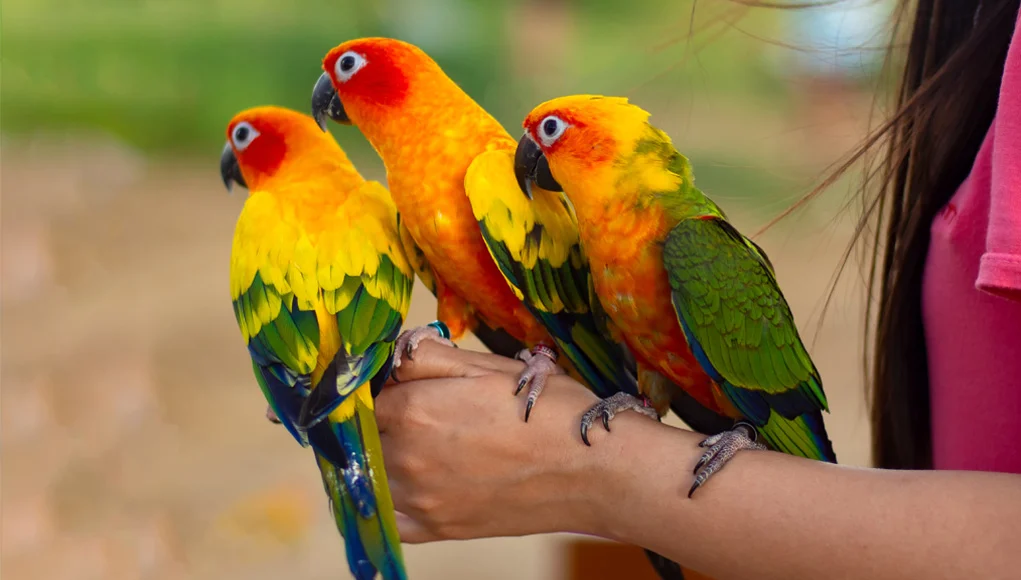
Sun Conures are like flying rainbows, boasting vibrant yellow, orange, red, and green feathers. These medium-sized parrots from South America are known for their playful and cuddly nature. Their bright plumage and lively antics make them a joy to have around.
Why They’re Great Pets
Sun Conures are friendly, social, and love being the center of attention. They’re ideal for owners who can dedicate time to play and training. Their lifespan of 15–30 years makes them a long-term commitment.
Care Requirements
- Diet: Pellets, fresh fruits, vegetables, and occasional seeds.
- Housing: Medium-sized cage with perches and toys.
- Attention: Daily handling to maintain their sociable nature.
- Pros: Bright colors, playful, moderately talkative.
- Cons: Can be noisy, not ideal for apartments.
3. Eclectus Parrot
Eclectus Parrots are striking for their sexual dimorphism—males are emerald green, while females are a brilliant red with purple accents. Native to Australia, these large parrots are gentle, intelligent, and less noisy than other parrots, making them great for families.
Why They’re Great Pets
Eclectus Parrots are calm and affectionate, often bonding closely with their owners. They can learn to mimic sounds and words, and their 30–40-year lifespan makes them a lifelong companion.
Care Requirements
- Diet: High-fiber diet with fruits, vegetables, and specialized pellets.
- Housing: Spacious cage with room to climb and explore.
- Attention: Moderate interaction to keep them mentally stimulated.
- Pros: Stunning dimorphism, gentle temperament.
- Cons: Requires a varied diet, sensitive to stress.
4. Rainbow Lorikeet
Rainbow Lorikeets live up to their name with a dazzling mix of blue, green, red, and yellow feathers. These Australian natives have brush-like tongues for sipping nectar, adding to their uniqueness. Their playful and energetic nature makes them a favorite among bird enthusiasts.
Why They’re Great Pets
Rainbow Lorikeets are engaging and intelligent, capable of learning tricks and mimicking sounds. They thrive in active households but require dedicated care due to their specialized diet. They live 15–25 years with proper care.
Care Requirements
- Diet: Nectar-based foods, fruits, and specialized lorikeet pellets.
- Housing: Large cage with space for climbing and play.
- Attention: High interaction to match their energetic personality.
- Pros: Vibrant colors, charming personality.
- Cons: Messy eaters, require specialized diet.
5. Gouldian Finch
Gouldian Finches, also known as rainbow finches, are small but spectacular, with green backs, purple breasts, and red, yellow, or black faces. Native to Australia, these finches are perfect for those who prefer hands-off pets that dazzle with color.
Why They’re Great Pets
Gouldian Finches are low-maintenance and thrive in pairs or small groups. They’re quiet and don’t require handling, making them ideal for beginners. Their lifespan is 5–10 years.
Care Requirements
- Diet: Finch seed mix, greens, and calcium supplements.
- Housing: Large aviary for group living, with perches and nesting boxes.
- Attention: Minimal, as they prefer socializing with other finches.
- Pros: Vibrant colors, low-maintenance.
- Cons: Fragile, not suitable for handling.
6. Hyacinth Macaw
The Hyacinth Macaw is the largest parrot species, known for its solid cobalt-blue plumage and yellow eye patches. Native to South America, these gentle giants are affectionate and intelligent, but their size and cost make them better suited for experienced owners.
Why They’re Great Pets
Hyacinth Macaws are loyal and enjoy cuddling with their owners. They can live over 30 years and are capable of learning basic words. Their striking appearance makes them a centerpiece in any home.
Care Requirements
- Diet: Nuts, fruits, vegetables, and high-quality pellets.
- Housing: Extra-large cage (5x5x6 feet) with durable toys.
- Attention: High, as they thrive on interaction.
- Pros: Stunning blue feathers, affectionate.
- Cons: Expensive, requires large space.
7. Lovebird
Lovebirds are tiny parrots bursting with color, featuring green bodies, bright faces (often peach or red), and blue tail feathers. These African natives are named for their strong pair bonds and affectionate nature, making them delightful pets.
Why They’re Great Pets
Lovebirds are playful and bond strongly with their owners or a mate. They’re ideal for those with limited space, as they’re small but full of personality. Their lifespan is 10–15 years.
Care Requirements
- Diet: Pellets, seeds, fruits, and vegetables.
- Housing: Small to medium cage with toys and perches.
- Attention: Daily interaction to prevent loneliness.
- Pros: Colorful, affectionate, small size.
- Cons: Can be nippy if not socialized.
8. Cockatiel
Cockatiels are known for their iconic orange crest and face patches against gray or white bodies. These Australian parrots are gentle, social, and excellent for beginners due to their easygoing nature and moderate care needs.
Why They’re Great Pets
Cockatiels are talented whistlers and can learn simple tunes or words. They’re affectionate and enjoy perching on their owner’s shoulder. Their 10–15-year lifespan makes them a great choice for families.
Care Requirements
- Diet: Pellets, seeds, and fresh produce.
- Housing: Medium cage with space for toys and perches.
- Attention: Moderate, with daily handling for bonding.
- Pros: Gentle, easy to care for, charming.
- Cons: Dusty feathers, may whistle loudly.
9. Canary
Canaries are small songbirds available in vibrant yellow, orange, red, or green hues. Known for their beautiful singing (especially males), these birds are perfect for those who want a low-maintenance, visually stunning pet.
Why They’re Great Pets
Canaries are ideal for beginners, as they don’t require handling and are content to sing and entertain. Their lifespan is 9–15 years, and their cheerful songs add a soothing ambiance to any home.
Care Requirements
- Diet: Canary seed mix, pellets, and greens.
- Housing: Small cage or aviary with perches.
- Attention: Minimal, as they’re hands-off pets.
- Pros: Beautiful songs, low-maintenance.
- Cons: Fragile, not interactive.
10. Pacific Parrotlet
Pacific Parrotlets are tiny parrots with big personalities, sporting green bodies with blue or yellow markings. These South American birds are playful and intelligent, making them great for owners who want a small but engaging pet.
Why They’re Great Pets
Parrotlets are feisty and can learn tricks or simple words. Their small size and 15–20-year lifespan make them suitable for smaller homes. They’re perfect for owners who enjoy active, social birds.
Care Requirements
- Diet: Pellets, seeds, fruits, and vegetables.
- Housing: Small cage with toys for stimulation.
- Attention: Daily interaction to keep them engaged.
- Pros: Tiny size, vibrant colors, playful.
- Cons: Can be territorial, requires training.
Comparison of the 10 Colorful Pet Birds
To help you choose the right bird, here’s a comparison table summarizing key factors:
| Bird | Size | Lifespan | Noise Level | Care Level | Best For |
|---|---|---|---|---|---|
| Scarlet Macaw | Large (32 in) | 40–50 yrs | High | High | Experienced owners |
| Sun Conure | Medium (12 in) | 15–30 yrs | High | Moderate | Active households |
| Eclectus Parrot | Large (17 in) | 30–40 yrs | Moderate | High | Families, quieter homes |
| Rainbow Lorikeet | Medium (12 in) | 15–25 yrs | Moderate | High | Energetic owners |
| Gouldian Finch | Small (5 in) | 5–10 yrs | Low | Low | Beginners, hands-off owners |
| Hyacinth Macaw | Large (40 in) | 30–60 yrs | High | High | Experienced, spacious homes |
| Lovebird | Small (6 in) | 10–15 yrs | Moderate | Moderate | Small spaces, social owners |
| Cockatiel | Medium (12 in) | 10–15 yrs | Moderate | Low | Beginners, families |
| Canary | Small (5 in) | 9–15 yrs | Low | Low | Beginners, apartment dwellers |
| Pacific Parrotlet | Small (5 in) | 15–20 yrs | Moderate | Moderate | Small spaces, active owners |
Choosing the Right Bird for Your Lifestyle
Selecting a colorful pet bird depends on your lifestyle, experience, and living situation. Beginners should opt for low-maintenance birds like Canaries or Cockatiels, while experienced owners might enjoy the challenge of a Scarlet Macaw or Hyacinth Macaw. Consider these factors:
- Space: Large birds like macaws need spacious cages and room to fly.
- Time: Social birds like Sun Conures and Lovebirds require daily interaction.
- Noise Tolerance: If you live in an apartment, choose quieter birds like Canaries or Gouldian Finches.
- Budget: Hyacinth Macaws and Eclectus Parrots are pricier, while Canaries and Lovebirds are more affordable.
Where to Get Your Colorful Bird
Always buy from reputable breeders or pet stores to ensure your bird is healthy and ethically sourced. Websites like Petfinder or local avian rescues can connect you with adoptable birds. Avoid supporting illegal pet trades, which harm wild populations.
Best Tools for Bird Care
Invest in quality supplies to keep your bird healthy and happy:
- Cages: Brands like Prevue Hendryx offer durable, spacious cages.
- Food: Kaytee and Lafeber provide specialized pellets and seed mixes.
- Toys: Super Bird Creations offers engaging toys for mental stimulation.
- Perches: Natural wood perches from A&E Cage Company promote foot health.
People Also Ask (PAA) Section
Here are answers to common questions about colorful pet birds, sourced from Google’s PAA:
What is the most colorful pet bird?
The Sun Conure and Rainbow Lorikeet are often considered the most colorful due to their vibrant, multi-hued feathers. Their bright yellows, reds, greens, and blues make them stand out as living rainbows.
Are colorful birds hard to care for?
Care difficulty varies by species. Canaries and Gouldian Finches are low-maintenance, while macaws and lorikeets require significant time, space, and specialized diets. Researching specific needs is crucial.
Which colorful bird is best for beginners?
Cockatiels and Canaries are excellent for beginners due to their gentle temperament, moderate care needs, and adaptability to smaller spaces. They’re also less demanding than parrots.
Can colorful birds talk?
Many colorful birds, like Scarlet Macaws, Eclectus Parrots, and Sun Conures, can mimic words and sounds. However, their talking ability depends on training and individual personality.
FAQ Section
How much do colorful pet birds cost?
Prices vary widely. Canaries and Lovebirds cost $50–$150, while Hyacinth Macaws can exceed $10,000. Ongoing costs include food, toys, and veterinary care.
Are colorful birds noisy?
Some, like Sun Conures and Scarlet Macaws, are loud and may not suit apartment living. Others, like Canaries and Gouldian Finches, are quieter and better for small spaces.
How long do colorful pet birds live?
Lifespans range from 5–10 years for Gouldian Finches to 30–60 years for macaws. Proper care, including diet and enrichment, extends their life.
Where can I buy a colorful pet bird?
Reputable breeders, avian rescues, or pet stores are the best sources. Check platforms like BirdBreeders.com or local shelters for healthy, ethically sourced birds.
Do colorful birds require special diets?
Yes, many require specific diets. Lorikeets need nectar-based foods, while macaws and parrots thrive on pellets, fruits, and nuts. Always consult an avian vet for guidance.
Tips for Caring for Your Colorful Bird
To ensure your bird thrives, follow these tips:
- Provide a Balanced Diet: Offer species-specific pellets, fresh produce, and occasional treats.
- Enrich Their Environment: Rotate toys weekly to keep them mentally stimulated.
- Regular Vet Checkups: Find an avian veterinarian for annual exams and health monitoring.
- Socialize Daily: Spend time talking, playing, or training to build trust.
- Maintain Cleanliness: Clean cages regularly to prevent illness.
Conclusion: Bringing Color to Your Life
Colorful pet birds like Scarlet Macaws, Sun Conures, and Gouldian Finches bring unparalleled beauty and joy to your home. Each species offers a unique blend of vibrant plumage and personality, making them more than just pets—they’re companions that brighten your days. By choosing a bird that matches your lifestyle and committing to their care, you’ll create a rewarding bond that lasts for years. Ready to welcome a feathered friend? Start researching reputable breeders or rescues today, and prepare to be dazzled by the colors and charm of your new pet.