Picture this: It’s a crisp morning in what we now call the Great Plains, but back then, it’s a vast, frozen tundra stretching endlessly under a pale sky. You’re bundled up, scanning the horizon, when a shadow looms—a colossal woolly mammoth lumbering by, its tusks curving like ancient scimitars. I’ve stood in museums staring at those bones, feeling a chill that’s not just from the air conditioning. As someone who’s hiked through fossil-rich badlands in South Dakota, hunting for clues to our prehistoric past, these creatures feel almost alive to me. They dominated North America during the Pleistocene epoch, a time of ice sheets and megafauna marvels. In this article, we’ll dive deep into eight of the most massive animals that called this continent home, exploring their lives, habitats, and the lingering mysteries of their disappearance.
The Ice Age Landscape of North America
North America during the Ice Age wasn’t the uniform frozen wasteland Hollywood often portrays. Vast ice sheets covered much of Canada and the northern U.S., but southern regions buzzed with life—grasslands, forests, and wetlands teeming with giants. Rivers carved through the land, creating migration routes for herds, while predators lurked in the shadows. Fossils from sites like the La Brea Tar Pits in Los Angeles reveal a vibrant ecosystem where these beasts interacted in ways that shaped the continent we know today.
What Was the Pleistocene Epoch?
The Pleistocene, spanning from about 2.6 million to 11,700 years ago, was marked by repeated glacial advances and retreats, earning it the nickname “Ice Age.” Temperatures fluctuated wildly, forcing animals to adapt or perish. In North America, this era saw the rise of megafauna—creatures over 100 pounds—that thrived in diverse habitats from tundra to savannas. It’s a period that fascinates me because it bridges our modern world with a wilder past, where humans eventually entered the scene.
Meet the 8 Massive Beasts
These animals weren’t just big; they were ecosystem engineers, shaping landscapes through grazing, predation, and even their sheer presence. Let’s break them down one by one, drawing from fossil evidence I’ve pored over in dusty archives.
Woolly Mammoth (Mammuthus primigenius)
Towering up to 11 feet at the shoulder and weighing six tons, the woolly mammoth was a shaggy icon of the Ice Age, roaming from Alaska to the Midwest. Its thick fur and curved tusks helped it survive brutal winters, digging through snow for grasses. I’ve touched a preserved tusk in a Yukon exhibit—smooth yet immense—and it hit me how these beasts must have thundered across the land like living bulldozers.
Columbian Mammoth (Mammuthus columbi)
Slightly larger than its woolly cousin, the Columbian mammoth reached 14 feet tall and tipped the scales at 10 tons, favoring warmer grasslands in the southern U.S. and Mexico. Unlike woollies, they had less fur and straighter tusks for foraging in open plains. Imagining a herd crossing what’s now Texas brings a smile—picture elephants on steroids, munching away without a care.
American Mastodon (Mammut americanum)
Stockier than mammoths at 9 feet tall and 5 tons, mastodons browsed forests from Florida to Alaska, using cone-shaped teeth to chomp branches and shrubs. Their shorter, straighter tusks were tools for stripping bark. On a trip to the Illinois State Museum, I saw a skeleton that made me chuckle— these guys looked like grumpy, oversized elephants who’d wandered into the wrong neighborhood.
Saber-Toothed Cat (Smilodon fatalis)
This feline predator, weighing up to 600 pounds with 7-inch canines, ambushed prey in packs across California to the East Coast. Built for power rather than speed, it pounced from cover, using those sabers to slash vital arteries. Recalling the La Brea Tar Pits display, where hundreds of these cats got trapped, it’s eerie yet funny how curiosity killed the cat—literally, in sticky tar.
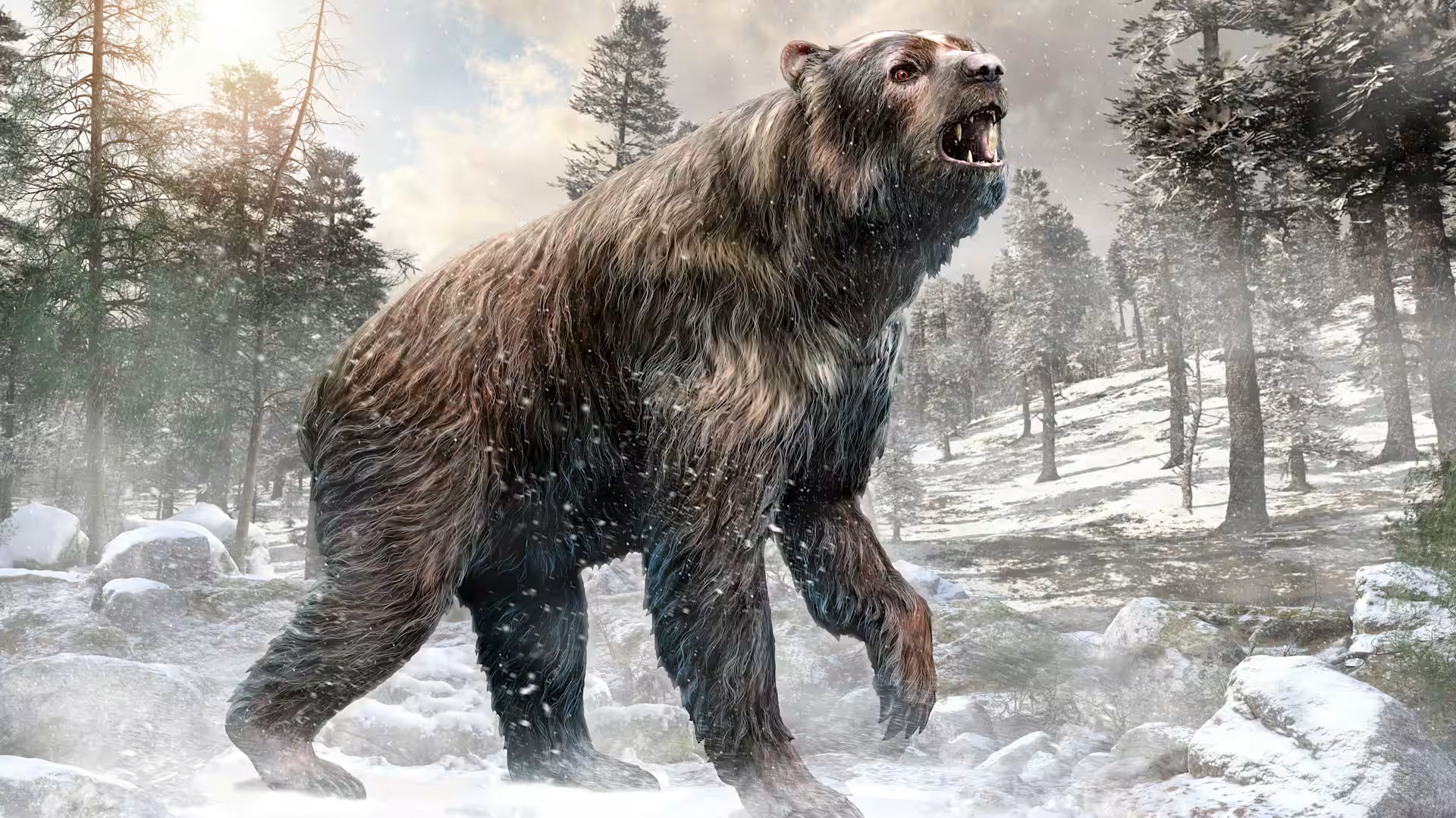
Giant Short-Faced Bear (Arctodus simus)
The largest land carnivore ever, standing 11 feet on hind legs and weighing a ton, this bear sprinted across the West, scavenging and hunting with a powerful bite. Its long legs and flat snout set it apart from modern bears. I once joked with a park ranger in Alaska that if these roamed today, we’d need bigger picnic baskets—and bear spray wouldn’t cut it.
Dire Wolf (Canis dirus)
Heavier than modern wolves at 150 pounds, dire wolves hunted in packs from Canada to South America, tackling large prey like bison with crushing jaws. Fossils show they adapted to various terrains. Game of Thrones fans might romanticize them, but in reality, these were tough survivors—I’ve seen their skulls up close, and those teeth scream “apex predator” with a side of menace.
Jefferson’s Ground Sloth (Megalonyx jeffersonii)
This bear-sized sloth, up to 10 feet long and 2,200 pounds, lumbered through eastern forests, using massive claws to pull down branches for leaves. Named after Thomas Jefferson, who mistook its fossils for a lion’s. Standing beside a mounted skeleton in Virginia, I couldn’t help but laugh—these slowpokes were the ultimate chill vibes in a high-stakes world.
American Lion (Panthera atrox)
Bigger than African lions at 800 pounds and 4 feet at the shoulder, this cat ruled prides from Alaska to Mexico, preying on horses and camels. Its fossils suggest a mane-less, striped coat. On a fossil dig, unearthing a claw fragment felt thrilling— these lions were the kings of the Ice Age, making today’s big cats seem like kittens.
Size Comparison: How These Giants Stacked Up
To put their enormity in perspective, here’s a quick table comparing their heights, weights, and habitats. It’s mind-boggling how they coexisted without constant clashes.
| Animal | Height (at shoulder) | Weight (lbs) | Primary Habitat |
|---|---|---|---|
| Woolly Mammoth | 11 ft | 13,000 | Tundra/Grasslands |
| Columbian Mammoth | 14 ft | 22,000 | Open Plains |
| American Mastodon | 9 ft | 11,000 | Forests/Woodlands |
| Saber-Toothed Cat | 3 ft | 600 | Varied, Ambush Spots |
| Giant Short-Faced Bear | 5 ft (11 ft standing) | 2,200 | Open Lands/Scavenging |
| Dire Wolf | 2.5 ft | 150 | Plains/Forests |
| Jefferson’s Ground Sloth | 6 ft (10 ft standing) | 2,200 | Wooded Areas |
| American Lion | 4 ft | 800 | Grasslands/Prides |
These measurements come from paleontological studies, like those at the American Museum of Natural History. Notice how herbivores dwarfed carnivores? It kept the food chain balanced—until it didn’t.
Daily Lives and Behaviors: Pros and Cons of Being Massive
Being huge had its upsides and downsides in the Ice Age world. Let’s weigh them out.
Pros of Megafauna Size:
- Intimidation Factor: Predators thought twice before attacking a 10-ton mammoth—safety in bulk.
- Resource Access: Long tusks and claws reached food smaller animals couldn’t, like high branches or buried roots.
- Migration Mastery: Large bodies stored fat for long treks across changing landscapes.
Cons of Megafauna Size:
- High Energy Needs: These beasts required massive calorie intakes; a mammoth ate 400 pounds of vegetation daily—tough in lean winters.
- Slow Reproduction: Long gestation periods meant populations recovered slowly from threats.
- Vulnerability to Change: Rapid climate shifts hit hard, as big bodies adapted slower than nimble critters.
From my hikes in fossil sites, I’ve seen evidence of herd behaviors—trampled paths suggesting social structures that added emotional depth to their stories.
The Mystery of Their Extinction
Around 11,000 years ago, these giants vanished in a blink of geological time. Was it climate change from retreating glaciers? Human overhunting, as paleo-people spread with spears? Or a combo, perhaps with diseases thrown in? I’ve debated this over campfires with fellow enthusiasts—the overkill hypothesis points to Clovis points found in mammoth bones, but skeptics note surviving species like bison faced similar pressures. A 2015 study in Science blames rapid warming, yet the Younger Dryas cold snap adds twists. It’s heartbreaking, imagining the last mammoth’s lonely trumpet.
People Also Ask
Drawing from common searches, here are real questions folks Google about these creatures, with concise answers optimized for quick reads.
- What animals lived during the Ice Age in North America? Besides our eight, think giant beavers, ancient camels, and stag-moose—over 60 megafauna species roamed, from predators like scimitar cats to herbivores like flat-headed peccaries.
- Why did Ice Age animals go extinct? A mix of factors: climate shifts altered habitats, while human arrival around 14,000 years ago introduced hunting pressure. Some theories add comet impacts or diseases.
- Were there giant sloths in North America? Yes! Jefferson’s ground sloth and others like the Shasta sloth wandered forests, standing tall on hind legs to browse—far from today’s tree-huggers.
- What is the largest Ice Age animal in North America? The Columbian mammoth takes the crown at 14 feet tall and 10 tons, edging out the short-faced bear for sheer mass.
Where to See Ice Age Fossils Today
Craving a real encounter? Head to the La Brea Tar Pits in Los Angeles for dire wolf and saber-tooth displays—it’s like stepping into a time capsule. The Yukon Beringia Interpretive Centre offers mammoth insights, while the Mammoth Site in South Dakota lets you watch active digs. For virtual tours, check the Smithsonian’s online exhibits (external link: smithsonian.org). Locally, if you’re building a site on prehistoric North America, link to our mammoth deep-dive article.
Best Books and Documentaries for Ice Age Enthusiasts
Dive deeper with “Twilight of the Mammoths” by Paul S. Martin—it’s a gripping read on extinction debates. For visuals, “Ice Age” on PBS (external link: pbs.org) brings beasts to life with CGI. If you’re shopping, Amazon’s fossil replica kits are fun starters (transactional tip: search “mammoth tusk model” for affordable education tools). These resources transformed my casual interest into a passion.
FAQ
What defined megafauna in the Ice Age?
Megafauna were animals over 100 pounds, thriving in North America’s Pleistocene landscapes. They included herbivores like mammoths and carnivores like saber-tooths, adapted to cold with fur, fat, or size.
How do we know what these animals looked like?
Fossils, frozen carcasses in permafrost, and tar pit preservations give us bones, skin, and even DNA. Sites like La Brea provide thousands of specimens, painting vivid pictures.
Did humans hunt these massive animals?
Yes, evidence like spear points in bones shows paleo-humans targeted them. But debate rages on whether overhunting alone caused extinctions or if climate played the bigger role.
Are any Ice Age animals still alive today?
Survivors include bison, musk oxen, and caribou, which adapted to changes. Most megafauna didn’t, leaving a gap in ecosystems we feel today.
What’s the emotional impact of studying these extinctions?
It’s a reminder of fragility—I’ve felt awe and sadness at sites, wondering if we’re repeating history with modern wildlife. It urges conservation, connecting past losses to present actions.
In wrapping up, these eight beasts weren’t just relics; they were vibrant parts of a world that shaped ours. From the mammoth’s mighty stride to the sloth’s lazy grace, they evoke wonder and a touch of melancholy. If you’ve ever marveled at a fossil, you know the pull—it’s like chatting with ghosts from a wilder time. For more on prehistoric predators, check our internal guide to saber-tooth evolution. Thanks for joining this journey; let’s keep uncovering the past together.