Imagine standing on a prehistoric beach, the waves lapping at your feet, when suddenly a shadow looms underwater – bigger than any shark you’ve ever seen. That’s the kind of chill these extinct beasts inspire. I’ve always been fascinated by fossils, remembering my first museum trip where a massive Megalodon tooth made me rethink ocean swims forever. In this deep dive, we’ll explore seven terrifying creatures that once ruled Earth, blending facts with a touch of awe at nature’s wild side.
Unleashing the Ancient Nightmares
These animals weren’t just big; they were engineered for dominance, with jaws, claws, and sheer size that would make modern predators look tame. From ocean depths to dense forests, they shaped ecosystems in ways we can barely fathom today. Let’s meet them one by one, starting with the giants of the sea.
1. Megalodon: The Ocean’s Ultimate Predator
Picture a shark so massive it could swallow a school bus whole – that’s Megalodon for you. This ancient behemoth roamed seas from about 23 to 3.6 million years ago, leaving behind teeth the size of your hand. I once held a fossilized one, and the serrated edges sent shivers down my spine, imagining what it could do.
Size and Ferocity Unleashed
Estimates put Megalodon at up to 60 feet long, dwarfing today’s great whites. Its bite force rivaled T. rex, crunching through whale bones like crackers. No wonder sailors’ tales of sea monsters might stem from these fossils washing ashore.
Habitat and Hunting Grounds
Megalodon cruised warm, coastal waters worldwide, from the Americas to Australia. It ambushed prey from below, using speed bursts up to 11 mph. Think of it as a stealth submarine with razor teeth – terrifying for any marine life in its path.
Why It Vanished
Cooling oceans and vanishing whale populations sealed its fate around 3.6 million years ago. Competition from smaller, agile sharks like the great white didn’t help. Thankfully, or we’d rethink beach vacations.
Fun Facts About This Sea Terror
- Teeth fossils were once thought to be dragon tongues by ancient cultures.
- A single bite could exert over 40,000 pounds of force.
- Nursery sites suggest protective parenting in shallow bays.
- Modern movies exaggerate, but real ones were scarier in subtlety.
2. Smilodon: The Saber-Toothed Slasher
Ever wondered what a cat with foot-long fangs could do? Smilodon, or saber-toothed tiger, prowled the Americas during the Ice Age, its iconic canines gleaming like daggers. I recall a documentary where they reconstructed one pouncing – pure nightmare fuel with a dash of elegance.
Build and Deadly Arsenal
Weighing up to 900 pounds, Smilodon was built like a wrestler, with powerful forelimbs for takedowns. Those sabers weren’t for biting hard but slicing throats precisely. Imagine a lion on steroids, but sneakier.
Life in the Wild
It haunted grasslands and forests from Canada to Patagonia, ambushing herds of mammoths and bison. Social packs might have hunted together, sharing kills – a family affair of terror.
Path to Extinction
Around 10,000 years ago, vanishing megafauna and climate shifts doomed it. Human arrival added pressure, turning hunters into the hunted. Good riddance for our ancestors’ sake.
Pros and Cons of Its Reign
Pros: Kept herbivore populations in check, boosting biodiversity. Cons: Likely terrorized early humans, making campfires essential.
3. Titanoboa: The Colossal Constrictor
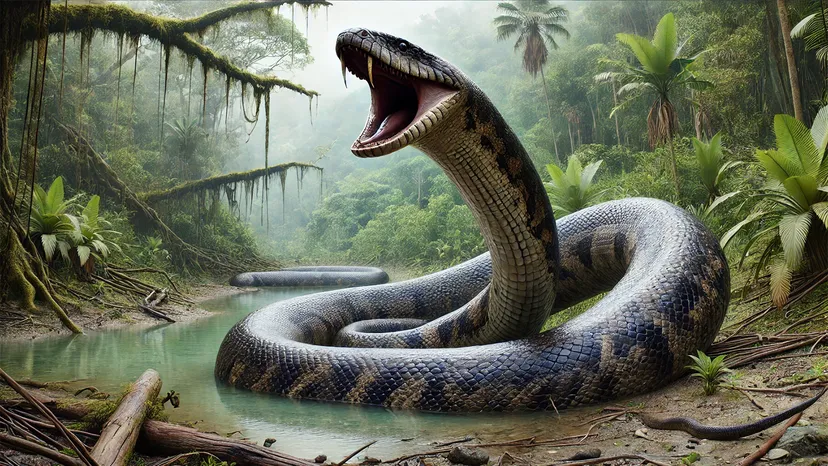
Snakes give me the creeps, but Titanoboa takes it to another level – a 40-foot serpent slithering through ancient jungles. Discovered in Colombian coal mines, its fossils paint a picture of a watery ambush artist. Humor me: if it existed today, zoos would need aircraft hangars.
Monumental Proportions
At over 2,500 pounds, it dwarfed modern anacondas by double. Thick as a trash can, it crushed prey with coils stronger than a hydraulic press. Fossils show vertebrae bigger than dinner plates.
Swampy Domains
Post-dinosaur Paleocene forests in South America were its home, lurking in rivers for crocs and turtles. Warm climates fueled its gigantism – think humid hell with fangs.
Demise of the Giant
Cooling Earth around 58 million years ago shrunk its habitat. Smaller prey couldn’t sustain it, leading to extinction. Relief for anyone afraid of slithery surprises.
Comparison to Modern Snakes
| Feature | Titanoboa | Green Anaconda |
|---|---|---|
| Length | Up to 42 ft | Up to 20 ft |
| Weight | 2,500 lbs | 550 lbs |
| Diet | Crocs, large fish | Mammals, birds |
| Habitat | Tropical swamps | Amazon rivers |
4. Phorusrhacos: The Axe-Beaked Avian Horror
Birds aren’t usually scary, but this “terror bird” changed the game – a 10-foot tall predator sprinting across plains. My first encounter was in a book illustration, its hooked beak like a meat cleaver. South America’s apex after dinosaurs.
Towering Stature
Standing eye-to-eye with a giraffe’s knee, it weighed 300 pounds with legs built for speed. That beak could crack skulls, making it a feathered T. rex minus arms.
Roaming the Savannas
Miocene South America was its playground, chasing down mammals in open grasslands. It might have kicked prey to death, like a oversized ostrich with attitude.
Fade into History
Around 2 million years ago, invading carnivores from North America outcompeted it. Climate drying up habitats sealed the deal. Imagine if it migrated further – nightmare picnics.
Bullet Points on Its Terror
- Top speed: 30 mph, outrunning humans easily.
- Beak force: Enough to puncture bone.
- Relatives: Modern seriemas, but pint-sized.
- Fossils: Skulls as big as horse heads.
5. Arctodus Simus: The Towering Bear Brute
Bears are intimidating now, but this short-faced giant stood 11 feet tall, sniffing out meals from miles away. I hiked in Alaska once, thinking of its prints – thank goodness it’s gone, or trails would be off-limits.
Massive Frame
Up to 2,000 pounds, it was twice a grizzly’s size with a snout for scavenging. Long legs meant endurance runs, chasing down or stealing kills.
North American Wanderer
Pleistocene forests and plains from Alaska to Mexico were its turf, overlapping with early humans. Omnivorous but meat-heavy, it bullied other predators.
End of an Era
Extinct 11,000 years ago amid megafauna collapse and climate change. Humans might have hunted it, turning the tables on this bully.
Pros and Cons Revisited
Pros: Controlled prey populations, aiding ecosystem balance. Cons: Could dominate food sources, starving competitors.
6. Deinosuchus: The Dinosaur-Crushing Croc
Crocodiles are stealthy killers, but Deinosuchus was a supersized version ambushing T. rex kin. Fossils from Texas rivers evoke images of lazy logs snapping to life – pure primal fear.
Enormous Scale
35 feet long, weighing 5 tons, it outbulked modern salties by far. Conical teeth crushed shells and bones alike.
Cretaceous Coasts
Late Cretaceous estuaries in the U.S. and Mexico, preying on dinosaurs at water’s edge. Ambush tactics with death rolls – a watery grave for the unwary.
Mysterious Exit
Vanished 73 million years ago, possibly from asteroid impacts or ecosystem shifts. Lucky for beachgoers, or croc warnings would be dinosaur-sized.
Table of Croc Comparisons
| Aspect | Deinosuchus | Saltwater Crocodile |
|---|---|---|
| Length | 35 ft | 23 ft |
| Weight | 5 tons | 1 ton |
| Bite Force | 23,000 lbs | 3,700 lbs |
| Prey | Dinosaurs, turtles | Mammals, fish |
7. Arthropleura: The Creeping Colossus
Giant bugs? Arthropleura was a millipede on steroids, scuttling through Carboniferous forests. As someone who squirms at spiders, this 8-foot horror with countless legs is the stuff of bad dreams – and a bit comical in hindsight.
Gigantic Form
Up to 8 feet long, 100 pounds, with armored segments and probing antennae. Not predatory, but its size alone could trample underfoot.
Ancient Woodlands
Equatorial swamps in Europe and North America, munching decaying plants. Amphibious, it ventured into water, leaving tracks like alien scripts.
Permian Perish
Extinct 290 million years ago from drying climates and rising competitors. Oxygen drops shrunk giants like it. Phew, or basements would need bigger traps.
Emotional Echoes
These creatures remind us of nature’s raw power – awe-inspiring yet humbling. Losing them saddens, but surviving without? A silver lining.
People Also Ask
Drawing from common queries on extinct terrors, here’s what folks wonder.
What is the most terrifying extinct animal?
Many point to Megalodon for its sheer oceanic dominance, but personally, Titanoboa’s slithery ambush wins the creep factor. Size, speed, and stealth make the difference.
Why did these scary animals go extinct?
Climate shifts, prey loss, and competition were key culprits, often tied to ice ages or asteroids. Human impact sped some along, like Smilodon.
Could any of these come back through science?
De-extinction via DNA is buzzed about, but ethics and tech hurdles loom. Closest? Mammoths, not these beasts – wisely so.
What extinct animal was the largest predator?
Megalodon tops lists for marine, while on land, T. rex reigns, but Deinosuchus bridged both worlds terrifyingly.
Where to Dive Deeper: Navigational Tips
Fancy seeing fossils? Head to museums like the Smithsonian or Natural History in London. Online, Wikipedia’s Megalodon page is a goldmine.
Best Tools for Paleo Enthusiasts: Transactional Picks
For digging into history, apps like Fossil Identifier or books such as “The Rise and Fall of the Dinosaurs” by Steve Brusatte are top-notch. VR sims let you “meet” them safely.
FAQ
What made these animals so scary?
Their adaptations – massive sizes, lethal weapons like fangs or beaks – turned them into unstoppable forces in their eras.
Did humans ever encounter any?
Yes, early folks crossed paths with Smilodon and Arctodus, likely inspiring myths of monsters.
How do we know about their behavior?
Fossils, bite marks, and comparisons to living relatives paint vivid pictures, though some mysteries linger.
Are there modern equivalents?
Great whites echo Megalodon, but nothing matches the scale – nature toned it down.
Why study them today?
Understanding extinctions helps prevent future ones, plus they’re endlessly fascinating for sparking wonder.
In wrapping up, these terrors highlight Earth’s dramatic past. While glad they’re gone, their stories enrich our world – a reminder to cherish what’s here now. For more on ancient wonders, check internal link to prehistoric beasts. Stay curious, folks.