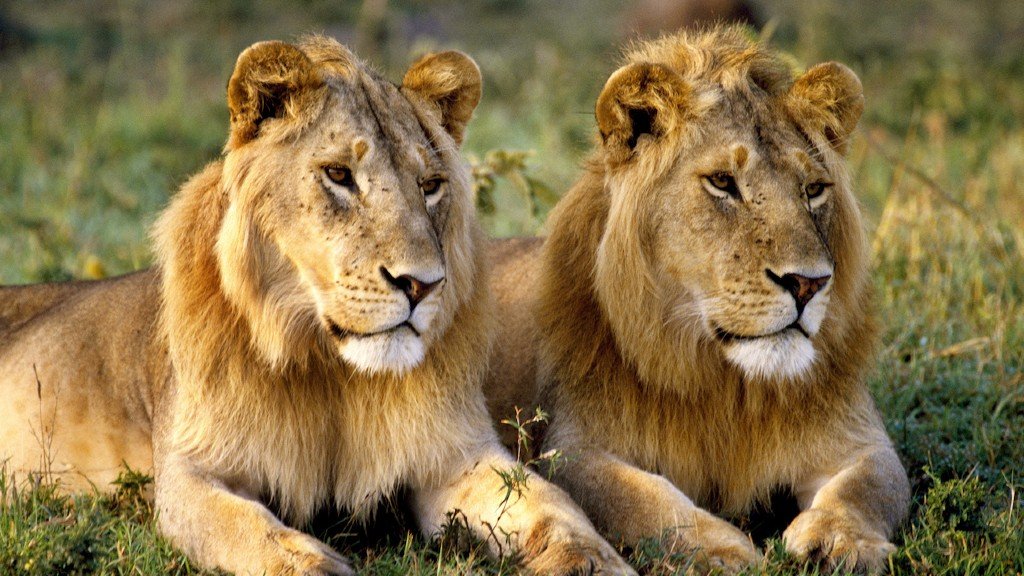
Imagine this: I’m bumping along a dusty track in the Serengeti at dawn, the air crisp with that earthy African scent, when our guide suddenly kills the engine. There, just 20 feet away, a pride of lions lounges in the golden grass like they own the place—which they pretty much do. The big male with his shaggy mane lets out a roar that vibrates through my chest, and the females perk up, rubbing heads in what looks like a casual family chat. It was my first safari back in 2018, and that moment hooked me on understanding these magnificent cats. Lions aren’t just symbols of strength; they’re complex social beings whose behaviors reveal a world of strategy, bonds, and survival instincts. In this article, we’ll dive deep into how lions thrive in the wild, from their family dynamics to their clever hunts, all drawn from years of field studies and my own awe-inspired observations.
Lions, or Panthera leo, have fascinated humans for centuries, earning titles like “king of the jungle” despite preferring open savannas. But beyond the myths, their behaviors are finely tuned to harsh environments where food is scarce and threats lurk everywhere. We’ll explore their social structures, communication, reproduction, and more, while touching on where you can witness this firsthand and even some top books for deeper dives. Whether you’re planning a safari or just curious, let’s unpack the real lives of these iconic predators.
The Social Fabric of Lion Prides
Lions stand out as the only truly social big cats, forming groups called prides that can include up to 40 members, though most hover around 15. This setup isn’t accidental—it’s a survival strategy honed over millennia in Africa’s grasslands. Females form the core, sticking together for life, while males come and go, adding a layer of drama that rivals any soap opera.
Role of Males and Females
Males handle the heavy lifting on defense, patrolling borders and fending off rivals with those impressive manes that signal strength and health. Females, meanwhile, are the hunters and nurturers, raising cubs communally in a system that’s both efficient and heartwarming. It’s like a well-oiled team where everyone knows their part, but with the occasional power struggle thrown in for good measure.
Pride Dynamics and Hierarchy
Hierarchy in a pride isn’t rigid like in wolf packs; it’s more fluid, based on age, experience, and alliances among related females. Older lionesses often lead hunts, while young males test boundaries until they’re ousted around age three. This constant flux keeps the group strong, but it can lead to tense moments, like when nomadic males challenge the resident coalition—think epic battles under the stars.
- Bonding Rituals: Lions strengthen ties through head rubbing and social licking, which spreads scents and builds trust.
- Cooperative Care: All females in a pride help nurse and protect cubs, ensuring higher survival rates.
- Territorial Shifts: Prides can split or merge based on resources, adapting to changing landscapes.
In my safari experience, watching a pride share a kill highlighted this unity; no one ate alone, and even the cubs got their turn, teaching me how interdependence defines lion life.
Hunting Strategies and Feeding Habits
Hunting for lions is a high-stakes game, with success rates around 25-30% due to their prey’s speed and vigilance. They prefer nighttime ambushes, using the cover of darkness and their keen night vision to stalk within 100 feet before exploding into action. Females do most of the work, coordinating like a SWAT team, while males join for larger targets.
Cooperative Hunting Techniques
In groups, lionesses fan out to encircle prey, with some driving animals toward ambushers—a tactic that boosts efficiency but requires precise timing. Solo hunts happen too, especially for smaller game, but cooperation shines against buffalo or zebras. It’s exhilarating to picture: silent shadows closing in, then a burst of raw power.
Feeding Hierarchy and Diet
Once down, the feast begins with males eating first, followed by females and cubs, though squabbles are common. Lions gorge up to 75 pounds in one sitting, then fast for days, scavenging when needed. Their diet varies by region, from wildebeest in the Serengeti to gemsbok in drier areas.
| Prey Type | Hunting Method | Success Rate | Nutritional Value |
|---|---|---|---|
| Wildebeest | Group ambush | 30% | High protein, sustains large prides |
| Zebra | Stalking and chase | 25% | Fatty meat, good for energy |
| Buffalo | Coordinated attack | 20% | Bulk food, but risky due to horns |
| Smaller mammals (e.g., warthogs) | Opportunistic solo | 40% | Quick meals, less effort |
Pros of Group Hunting:
- Higher chance of taking down big prey.
- Shared risk reduces individual injury.
Cons of Group Hunting:
- Energy divided among members.
- Potential for disputes over shares.
From what I’ve read and seen, these strategies make lions apex predators, but they’re not invincible—failed hunts mean empty bellies, adding urgency to every move.
Communication: The Language of Roars and Rubs
Lions “talk” through a symphony of sounds, scents, and touches, creating a rich dialogue that maintains pride cohesion over vast territories. A roar can travel five miles, not just for show but to rally kin or warn intruders—imagine hearing that echo across the plains at night. Growls signal aggression during feeds, while soft grunts keep the group connected on the move.
Vocalizations and Their Meanings
Roars establish dominance and coordinate, with males booming louder to intimidate. Purring, like a giant house cat, shows contentment during grooming sessions. These sounds evolve with context, from playful cub calls to fierce territorial challenges.
Non-Vocal Cues
Body language is key: Tail flicks indicate irritation, while nuzzling reinforces bonds. Scent marking via urine or gland rubs claims turf, a subtle but effective boundary setter.
- Roar: Territorial marker, heard up to 5 miles.
- Growl: Warning during conflicts or meals.
- Grunt: Contact call to locate pride members.
- Purr: Affection during social interactions.
Humorously, if lions had phones, they’d still prefer these primal methods—less drama than group texts! This communication web fascinated me on safari, where a single roar shifted the entire pride’s mood.
Reproduction and Raising the Next Generation
Lions breed year-round, but peaks align with food abundance, ensuring cubs’ best shot at survival. A lioness mates every 15-30 minutes during her four-day heat, often with multiple males to confuse paternity and protect offspring. Gestation lasts about 110 days, yielding 1-4 cubs hidden in dens for safety.
Mating Rituals
Courtship involves playful chases and affectionate nips, but it’s intense—males compete fiercely, sometimes fatally. This ensures strong genes pass on, though it can disrupt pride stability.
Cub Rearing Practices
Cubs emerge blind and helpless, relying on communal nursing where aunties pitch in. By six months, they join hunts, learning through play that mimics real skills. Survival odds are tough—only half reach adulthood due to starvation or infanticide by new males.
In one touching story from documentaries I’ve watched, a lioness adopted an orphaned cub, showing the emotional depth behind their behaviors. It’s a reminder that lion families, like ours, blend love with harsh realities.
Territorial Instincts and Defense
Territories span 20-400 square miles, depending on prey density—larger in arid zones like the Kalahari. Males mark with roars and scents, patrolling daily to deter nomads. Intrusions spark brutal fights, where coalitions of brothers hold the edge.
Defending Borders
Fights are ritualistic at first—posturing and roaring—but escalate to claws and teeth. Winners absorb females, often killing existing cubs to trigger new breeding cycles, a grim but evolutionary tactic.
Adaptations to Habitat
In dense bush, territories shrink for better defense; open plains allow expansion but demand more vigilance.
Comparison of Territory Sizes:
- Serengeti: 50-100 sq mi (abundant prey).
- Kalahari: 200+ sq mi (scarce resources).
Pros of Large Territories: More food access.
Cons: Harder to patrol, higher energy cost.
Observing a border skirmish from afar on my trip was intense—like watching nature’s border patrol in action, underscoring lions’ fierce loyalty to home.
Interactions with Other Wildlife
Lions rule as apex predators, but interactions vary: They clash with hyenas over kills in noisy standoffs, avoid elephants’ charges, and occasionally team up against common threats. With herbivores, it’s predator-prey, but they tolerate birds like oxpeckers that clean parasites.
Rivalries and Symbioses
Hyenas steal 10-20% of lion kills, leading to retaliatory raids. Yet, vultures signal carrion, indirectly aiding lions.
Prey Dynamics
Hunts target weak individuals, culling herds and maintaining ecosystem balance—lions keep populations healthy.
- With Hyenas: Frequent thefts and battles.
- With Elephants: Mutual respect; lions avoid adults.
- With Birds: Symbiotic cleaning services.
It’s like a wild neighborhood where alliances shift, and everyone watches their back. One funny encounter I heard: A lion pride ignoring a porcupine—spiky snacks aren’t worth it!
Threats Facing Lions Today
Wild lion numbers have plummeted to around 20,000, down 75% in a century, due to habitat loss and human encroachment. Once roaming Europe and Asia, they’re now mostly in sub-Saharan Africa, facing existential risks.
Human-Wildlife Conflict
Farmers poison or shoot lions preying on livestock, a cycle fueled by shrinking wild spaces. Climate change worsens droughts, pushing lions closer to humans.
Conservation Efforts
Organizations like WWF and local reserves promote anti-poaching and community programs, like livestock corrals to reduce conflicts.
Pros of Conservation:
- Boosts tourism economies.
- Preserves biodiversity.
Cons:
- High costs and political hurdles.
Supporting these via donations or eco-tourism makes a difference—I’ve donated after seeing the fragility firsthand.
For navigational intent, top spots to observe include Serengeti National Park in Tanzania or Kruger in South Africa. Book through reputable outfits like African Bush Camps for ethical safaris.
Transactionally, consider “The Lion: Behavior, Ecology, and Conservation” by Craig Packer for in-depth reading—it’s a must for enthusiasts. External link: National Geographic Lion Facts. Internal: Check our guide on [/safari-planning].
People Also Ask
How do lions communicate with each other?
Lions use roars for long-distance alerts, growls for warnings, and physical rubs for bonding. These methods keep prides coordinated across territories.
What is the structure of a lion pride?
A pride typically has 2-4 males, multiple females, and cubs. Females hunt and raise young; males defend.
Why do lions hunt in groups?
Group hunting improves success against large prey, sharing the workload and risk in resource-scarce environments.
How long do lion cubs stay with their mothers?
Cubs stay until 2-3 years, learning skills before females breed again and males disperse.
FAQ
What do lions eat in the wild?
Primarily large herbivores like zebras and wildebeest, but they’ll scavenge or take smaller prey. They consume up to 75 pounds per meal.
Are lions endangered?
Yes, classified as Vulnerable by IUCN, with main threats being habitat loss and poaching.
How can I help lion conservation?
Support organizations like Lion Recovery Fund through donations or advocate for sustainable tourism.
What’s the best time to see lions on safari?
Dry seasons (June-October) when animals gather at waterholes, making sightings easier.
Do lions climb trees?
Sometimes, especially in places like Uganda’s Ishasha, to escape heat or survey prey.
Wrapping up, understanding lion behavior reveals not just survival tactics but a tapestry of emotions and adaptations that mirror our own social worlds. From that Serengeti dawn to ongoing conservation battles, these cats deserve our respect and protection. If you’ve got a lion story, share it—nature’s lessons are best when swapped over a campfire.